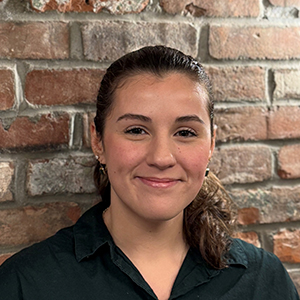
When Dr. Freddie Wills looked across the geospatial intelligence industry, he didn’t just see satellites, sensors, and data pipelines. He saw people, and more importantly, a gap.
“I looked across the industry and saw opportunities for increasing diversity,” he says. “I thought this was an opportunity for Harris-Stowe to be a heavy contributor to this process.”
As the administrator overseeing STEM partnerships and co-curricular programming at Harris-Stowe State University (HSSU), a historically Black college in St. Louis, Dr. Wills’ job is to connect people. Students to industry, academia to the workforce, and institutions to the communities they serve. After previous roles at the St. Louis College of Pharmacy and Washington University in St. Louis, he recognized that the region’s rapid emergence as a geospatial science hub needed more than corporate investment. It needed people.
Building Up People, Not Just Programs
The HBCU (Historically Black Universities and Colleges) Immersion in GEOIN (Geospatial Intelligence) program was born from a simple question: Who is going to fill the jobs of the future, and are they ready? The four-week summer program brings students from HBCUs across the country to St. Louis, where they live on the HSSU campus and work out of the university’s GeoHornet Lab at T-REX, the city’s downtown innovation hub. However, the program isn’t just about teaching software or mapping techniques. It’s about developing the people who will carry the industry forward.
“We truly put students in a position where they have to practice critical thinking, teamwork, and communication,” Dr. Wills says. “We give them hands-on experience, then let them find their own way as a team.” Those three pillars of critical thinking, collaboration, and communication are workforce skills that transcend any single industry. They’re the competencies that hiring managers consistently rank among the hardest to find and the most valuable to develop.
The People Who Make It Possible
No workforce pipeline is built in isolation. The program’s success depends on the people already working in the field, and in St. Louis, those people are showing up. The National Geospatial-Intelligence Agency’s Moonshot Labs sits just next door to the GeoHornet Lab at T-REX. That proximity isn’t just convenient; it’s transformative. Students tour the lab, engage with professionals working there daily, and learn firsthand what the work actually looks like, including the distinction between classified and unclassified projects.
“They’ve been wonderful,” Dr. Wills says of the Moonshot Labs team. “We continue to welcome that opportunity for engagement each year.” Partnerships with the Cortex Innovation District and T-REX further expand the human network students tap into. Company visits, guest lecturers, and informal conversations all expose students to the people behind the technology.
The proof of any workforce development program is in where its people end up. For HSSU’s immersion alumni, the outcomes speak for themselves. Participants have landed internships at NGA, Esri, and T-Kartor. Others have pursued graduate studies in GIS at Northwest Missouri State University. This fall alone, three former participants are heading to North Carolina State University.
A Recruitment Strategy Built on People
There’s a second, quieter purpose behind opening the program to HBCUs nationwide. It’s about people—specifically, about convincing them that St. Louis is a place where they can build a life.
“If I can bring students from other HBCUs across the country to St. Louis and introduce them to the community, I can say, ‘After graduation, this is an opportunity for you to come back here and be part of what we’re doing,'” Dr. Wills explains. “It’s almost like a recruitment effort to come to St. Louis. We’d love to have you as part of our community.”
The program introduces students to the city’s culture, its restaurants, and its neighborhoods, because workforce development isn’t just about skills. It’s about belonging, and people stay where they feel connected and supported.
A Voice for Other Workforce Builders
For other institutions and organizations looking to build similar pipelines, Dr. Wills’ advice is people-first. Start with your community, he says; look at what’s happening from a civic standpoint, what’s happening in the industries around you, and how you can latch onto it. Build real partnerships.
“You have to be on the ground with industry. You have to be on the ground with government agencies,” he says. “You want to make sure that what you’re doing in your program is in alignment with what the workforce is doing.”
Engage the people already in the field. “The more you can engage with professionals in the fields you’re building programs around, the better for the program, the better for your teaching modalities, and the better for what you bring to the table.”
At its core, the HSSU HBCU Immersion in GEOIN program isn’t about geospatial science. It’s about the students and giving them exposure, building their skills, connecting them to professionals, and showing them a place where they can thrive. Technology will keep evolving, and the industry will keep growing, but the people who enter the field today, equipped with both technical skills and the confidence to use them, are the ones who will define what geospatial intelligence looks like tomorrow.
As Dr. Freddie Wills has shown, building that future starts with opening a door and then standing beside it, saying good morning to every single person who walks through.


