
The future of the workforce was a recurring theme in Geo Week’s second day of sessions here in Denver. The day featured multiple presentations and discussions addressing the challenges in the demand gap, the lack of adequate resources for students, and the seemingly impossible process of applying to jobs. Along with the challenges came advice from experts in the field and the students who are carving their way despite it all. Attendees and speakers were left inspired by the voices and accomplishments of these young professionals.
In a panel discussion, Dr. Shawana Johnson shared research that stated the demand for geospatial talent in North America is growing nearly five times faster than the number of qualified graduates entering the field. According to the panelists, that gap has been widening for years, and it won’t close on its own—not without the industry doing something fundamentally different. When the question was turned over to the students, they noted two main challenges in the journey to a career:
An Impossible Hiring Process
Nearly a third of successful hires come through personal referrals. Networking is the best solution, but employers must consider what it means for everyone without an existing connection to the industry. The formal application process has an interview rate of roughly 2% for entry-level candidates. Hundreds of applications and little to no responses,
The story of one physics graduate, Collin Collins, was jarring. Collins wasn’t able to attend the session due to an unexpected career opportunity, but his presentation was showcased by his colleague Ed Kunz. Kunz shared that Collins applied to 163 positions, was rejected by 122, and was ghosted by 35 more. He spent the better part of a year doing everything he was technically supposed to be doing, and it went nowhere. What finally worked was a 20-minute phone call, one person in the industry who knew his work and made an introduction. “I spent a year fighting algorithms,” he stated in his presentation, “but got an opportunity in a few days talking to humans.”
Companies That Don’t Come to You
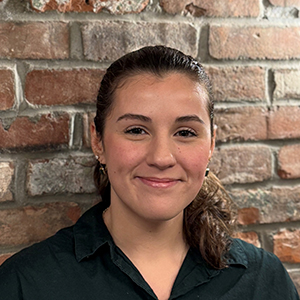
Grace Braver is finishing a master’s degree in geospatial analysis at East Tennessee State University. In six years as a student, she has never once seen a geospatial company at a campus career fair. Most students who break into the field do so through a professor’s personal network, which means their chances depend on whether they happen to work closely with the right faculty member. Conferences where the real networking happens are expensive, and for a student choosing between rent and a plane ticket, that’s not a close call.
Job postings don’t help much either. Listings labeled “entry-level” range from requiring a high school diploma to demanding a master’s degree and two years of experience. For someone trying to figure out where they fit, the signals are confusing at best.
Grace’s request to the industry was simple: show up. “I remember every company and every person that made an impact on my conference experience,” she said. “I am more inclined to have positive business relationships with them forever because they did something for me when I was a nobody.”
The Solutions
The research and experts on the panel pointed to a few concrete directions. One is a university consortium: a structured program, modeled partly on partnerships the Space Force has built with academic institutions, that would move students through real commercial workflows and place them directly with member firms. Another is a shared talent bench for seasonal demand, so that smaller firms aren’t constantly poaching from each other or burning out their best people during busy periods. Other recommendations include bringing students to industry conferences with dedicated networking spaces and travel support, and companies making a habit of visiting local universities and community colleges directly.
But perhaps the most consistent theme, across every interview and every case study in the research, is simpler than any program: human connection.
Jessica Touchard, at GeoSearch Inc., put it plainly. “Apply for a position, then find people within that organization to connect with. Introduce yourself. Explain what problems you can solve. That personal connection brings you to the top of the pile.”
The structural fixes matter: the campus visits, the salary transparency, and the mentorship programs. But so do the phone calls, showing up at a career fair, and responding to the application from the candidate with a strong portfolio and no connections.
Near the end of the day, attendees were given a glimpse into what the next generation of geospatial professionals looks like, especially when given the proper resources and opportunities. Each year, the GEO Empower Scholarship recognizes students who are already doing meaningful work in the field. This year’s recipients are an inspiration for the future of this workforce.
Barira Rashid (University of Arkansas) is a PhD student who uses AI and remote sensing to study how livestock operations affect water quality and hosts a podcast about phosphorus sustainability on the side. She’s also contributed to NASA humanitarian data projects. Her goal, she says, is for her science to be “accessible and usable for all purposes.”
Paulina Alejandra Vergara Buitrago (University of Minnesota) works with potato farmers in the Colombian mountains, using GIS to map land cover changes, but always in partnership with local communities, not just on their behalf. “I love the technology; I love the tool,” she said, “but it’s the human that brings me here today.”
Khris Gonzalez Pebe (University of Southern California) was unfortunately unable to attend the ceremony, but is an impressive student committed to ensuring that geospatial work centers equity and cultural context, producing insights that empower communities rather than distort their realities.
Both Barira and Paulina, independently, offered the same advice to their peers that attendees heard throughout the day: don’t chase volume; chase meaning. Make real connections. Show your work’s impact on people, not just on datasets. The demand for geospatial expertise isn’t slowing down. The question is whether the industry will support the people to meet it or spend the next decade wondering where everyone went.


