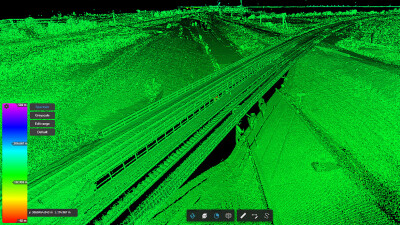

Infrastructure projects are some of the most complex and dynamic undertakings in construction. The precise engineering of bridges, pipelines, highways and utilities are one thing on paper, but then another on the construction site. Conditions change, work progresses, and unforeseen challenges emerge daily. Traditional documentation methods like periodic site visits, manual reports, and scheduled photo updates can lead to gaps that can cause costly mistakes, rework, disputes and delays. The emerging solution, from reality capture to other devices, is to capture and model the jobsite continuously.
What Is Continuous Capture?
The concept of continuous capture (sometimes called 4D modeling) refers to an ongoing, systematic recording of a project site using technologies like 360° cameras, drones, lidar, or IoT-connected sensors. Rather than static snapshots in time, continuous capture methods can produce a living, time-stamped visual record of every phase of construction from groundbreaking to final inspection. While this may seem like overkill at first glance, the ability to look back in time or “see through walls” already constructed quickly becomes invaluable.
"The more we can do upfront, when a trench is open, the easier it's going to be going forward for all of us,” says Tom Cerchiara, Pix4D, in a Geo Week News webinar .Whether it's just creating a GIS map or trying to create a 3D digital twin of your system, capturing how things change over time provides a detailed record of everything that’s happened thus far. More examples of this type of work were shared in the webinar, and you can read a full recap here.
Accountability and Dispute Resolution
One of the most critical benefits to having data continually captured is by providing additional accountability. When something goes wrong like a structural discrepancy, a subcontractor dispute, or an insurance claim, the record of the construction progress can provide an indisputable look at what happened, when, and how (and even who was responsible for the error). It can remove the risk of relying on guesswork and protects all parties involved.
When field sketches are incomplete, the cost of that gap is often felt immediately. As James Melachrinos of Con Edison explained in the webinar, "We have to call construction. We have to go back on the site, and that costs man-hours. Sometimes the trench is plated. Sometimes the trench is backfilled." A continuous record would eliminate that back-and-forth and would spare them having to dig an asset back out of the ground.
Remote Progress Verification
Continuous capture as a practice enables owners and project managers to confirm work completion by reducing costly site visits, maintaining oversight across multiple projects simultaneously. This is especially valuable for large-scale infrastructure where sites may span miles or be located in hard-to-reach areas.
The scale of the challenge is real. Tim Massi of National Grid put it directly, "I can't scale to have a surveyor on site of every distribution project that's happening every day all over the state. It's hundreds."
Reality capture tools, especially if they are on inexpensive or mobile devices, can make remote verification possible without adding headcount.
Safety and Compliance
Safety and compliance also improve significantly when there is more data captured more frequently. Continuous visual data helps identify hazards in real time and creates a reliable audit trail for regulatory requirements. Teams can spot issues before they become incidents, not after. With the sensitive and dangerous nature of high voltage, gas lines, and other utilities, this is even more crucial for safety.
As-Built Documentation and Long-Term Value
When construction wraps, the accumulated data can become a foundation for accurate as-built documentation that’s essential for future maintenance, upgrades, and ownership handoffs (some call this a “digital twin”). For infrastructure projects where timelines stretch years and budgets run into the billions, continuous capture isn't a luxury. It's risk management.

.png.small.400x400.png)