Every week here at Geo Week News, we have been highlighting some of our favorite stories from around the internet that cover the geospatial, 3D, and AEC industries. Whether it’s a fascinating case study, insights from an industry thought leader, or deep dives into new tools, there is never any shortage of great writing and storytelling in this industry. So, below you can find links to three stories that we loved this week.
Why AI needs your BIM
Preston Smith | IPX Blog
As robotics companies race to build machines capable of navigating our homes and workplaces, one surprising asset has become critical to their success: Building Information Models (BIM). In a new piece from Integrated Projects, author Preston Smith argues that the detailed spatial data locked inside architects’ and engineers’ BIM files is poised to power the next major AI market – and that the AEC industry should move quickly to capitalize on it before the opportunity passes them by.
Topobathymetric Lidar for River Mapping: A Complementary Solution
Florian Caraveo | LiDAR Magazine
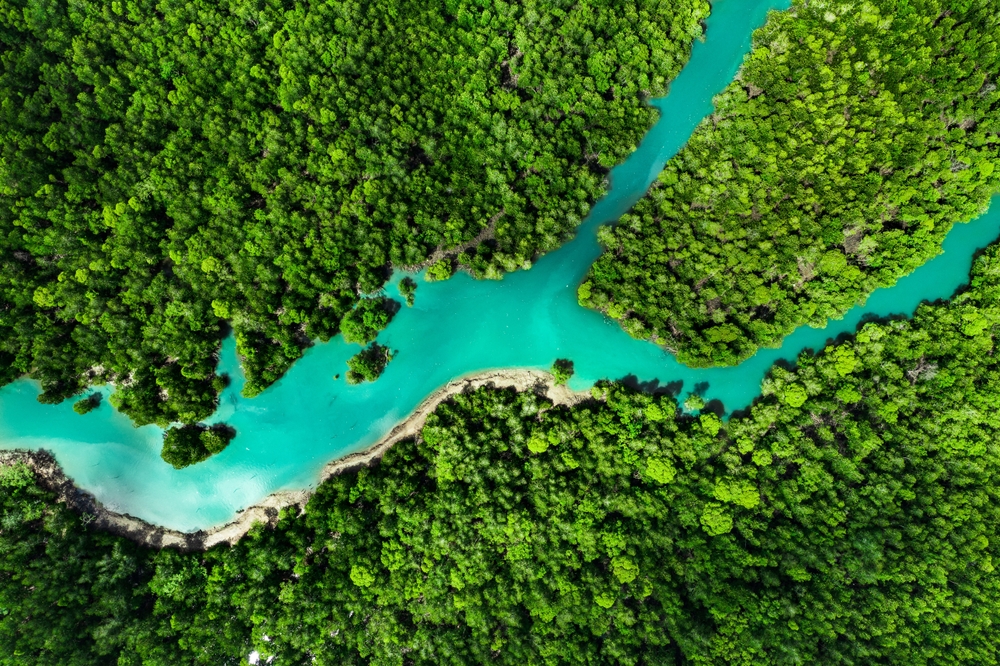
Drone-mounted topobathymetric lidar is emerging as a game-changer for river mapping, capable of capturing both underwater terrain and riverbanks in a single pass with seamless continuity between the two. While traditional methods like echo sounders and surveying poles remain reliable, the technology offers surveyors and environmental scientists a faster, more comprehensive alternative — though its effectiveness is limited to clear water conditions and low-flow periods.
National Geospatial Policy Strengthening India’s Mapping Ecosystem
Staff Writer | The Usthadian
India’s National Geospatial Policy 2022 is pushing the country toward becoming a global leader in mapping technology, opening up spatial data access to private firms, researchers, and startups for the first time. With ambitious targets including a complete Digital Elevation Model of the country by 2030 and a National Digital Twin for major cities by 2035, the policy signals a sweeping modernization of how India collects, shares, and acts on geographic data.