
Pitching and implementing new workflows to those fond of legacy defenders can be an uphill battle. While a technology may promise efficiency and innovation, government agencies face distinct challenges in aligning with the needs of stakeholders, budgets, and established procedures. In a recent Geo Week webinar, we heard from three transportation professionals who have mastered the art of getting internal buy-in to get their departments on board and excited about new geospatial tech. These workflow changes have saved time, money, and increased safety, but were not without challenges.
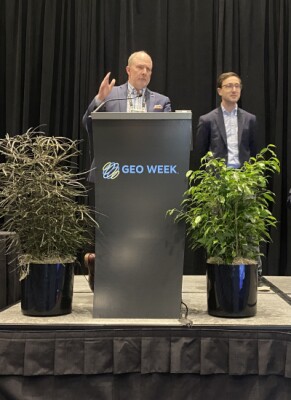
During the webinar, “DOTs, Government Agencies and Geospatial Tech: The Challenges and Benefits of Adoption”, experts with experience from three different Departments of Transportation (DOTs), shared their perspectives and experiences in adopting new technology in their industry. Hosted by Carla Lauter, Senior Content Manager for Geo Week News, the event featured insights from Kourosh Langari, an industry veteran with more than 30 years of experience in digital delivery and transportation projects at CalTrans, now at HNTB; Caprice A. Larimer-Musty from Alaska DOT; and Rob Martindale, Utilities Program Manager at Colorado DOT.
While all acknowledged the benefits of adopting new technologies like drones, reality capture and more, a major focus of the webinar was how to overcome obstacles that vex DOTs when transitioning departments to updated tools. Organizational and cultural resistance was a consistent theme across all speakers, with some sharing stories of the challenges of helping colleagues let go of legacy systems.
Larimer-Musty noted that one of the biggest challenges at Alaska DOT came from “naysayers that didn’t think this was going to work and… didn’t want to listen.”
Langari echoed this.
“DOTs are traditionally very conservative organizations. They measure twice, cut once.”
To overcome these hurdles, the panelists stressed the importance of executive sponsorship, starting small with pilot projects, and demonstrating measurable returns on investment.
Martindale added, “It takes a champion inside your department. It takes support from your executive management team.” By proving value early, agencies can build momentum and support.
Once implemented, the payoff to adding new technologies is clear. Larimer-Musty shared an example of how Alaska’s DOT Drone Program has transformed the way remote runways are monitored, proving more efficient and safe options for workers. Following a major earthquake, drone mapping saved the agency tens of thousands of dollars while providing critical data quickly and safely.
At CDOT, Martindale shared how 3D modelling increased utility coordination, preventing delays in construction due to utility clashes. Langari brought a broader perspective, pointing to the need for national standards and consistent digital delivery processes.
Looking to the future, the panelists expressed excitement about robotics in construction and public works, increasingly detailed digital twins, and expanded drone use in emergency surveillance and monitoring.
For agencies at the start of their digital transformation journey, the experts offered clear advice: start with small, manageable pilots, secure leadership support early, set measurable goals, and share early successes to build momentum. Change won’t happen overnight, but with the right strategy, digital tools can save money, improve safety, and deliver better outcomes for communities.