

Case Study contributed by Topcon Positioning Systems
The reconstruction of the Ashaiman Roundabout to Akosombo Junction section of Ghana’s Eastern Corridor is more than just a road upgrade; it is the renewal of a strategic national artery that will help improve local mobility and stimulate economic growth.
Stretching across 63.7 kilometers, the project forms a vital connection between the Port of Tema and the northern regions, supporting the movement of goods deep into the country and onward to Burkina Faso.
With a contract exceeding €256 million, the scheme stands as one of the most significant infrastructure investments currently underway in West Africa, and its successful delivery will shape mobility and commerce for decades to come.
Delivering major infrastructure renewal
The reconstruction of the Ashaiman Roundabout–Akosombo Junction section of the Eastern Corridor is technically demanding. The route’s key role as the primary connection between the Port of Tema and the northern regions means construction must progress while the corridor remains operational.
The renewal sees the road upgraded from single lane to dual or a triple lane road in either direction, as well as a new fly-over, greatly increasing capacity and ease of travel from Ghana’s major port all the way to Burkina Faso.
Working space is limited along much of the road, with the combination of live traffic and varied ground conditions placing significant pressure on accuracy, sequencing and safety.
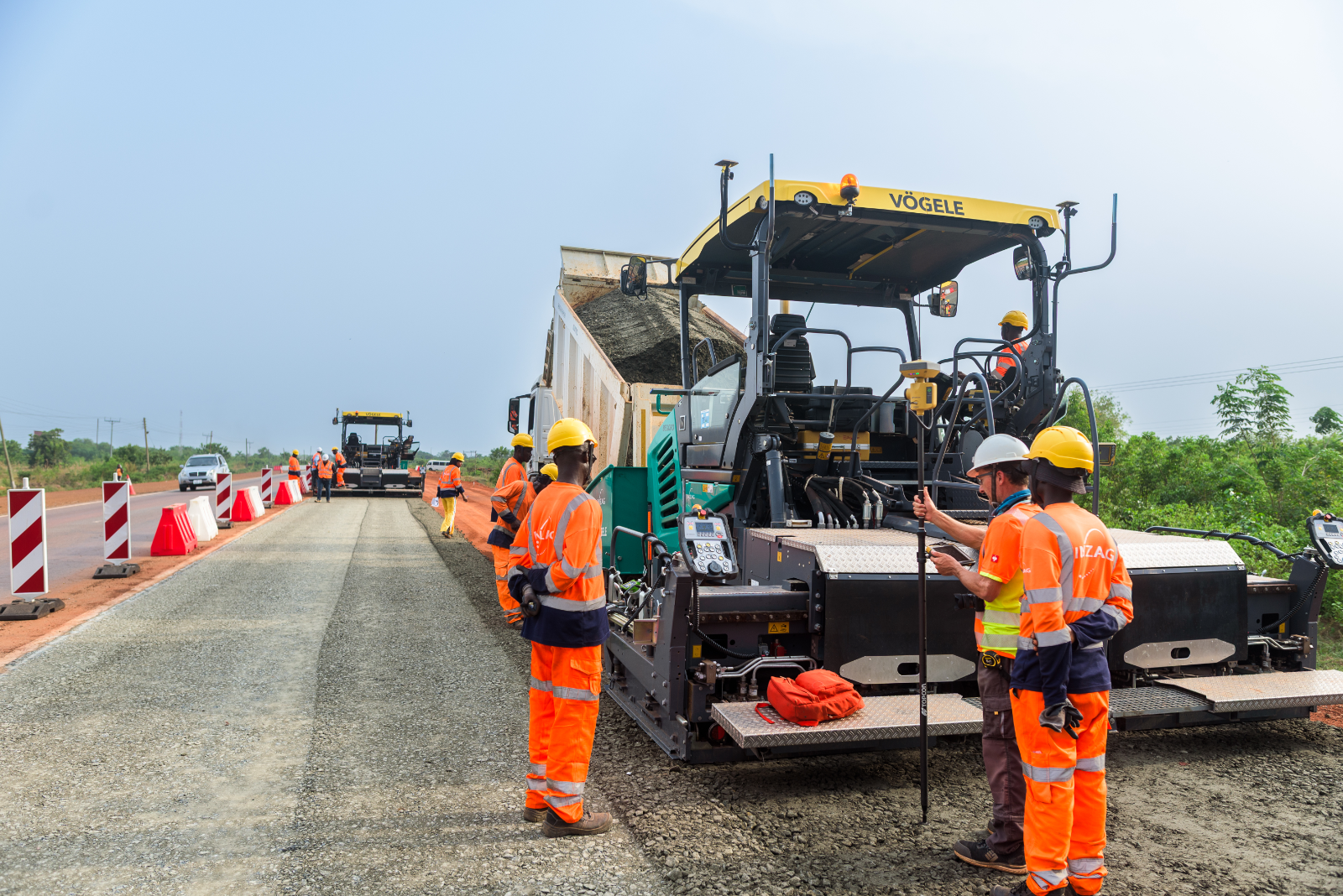
These constraints shaped the delivery strategy from the outset. Maintaining formation levels across such a long, narrow and heavily used corridor requires precise control of earthworks and paving, while the need to minimize rework and material waste is heightened by the logistical challenges of moving plant and aggregates through busy sections. Ensuring consistent quality across the full length of the project, despite the changing terrain and tight working windows, became one of the central engineering challenges.
To support productivity, safety, and accuracy, contractor Inzag has incorporated digital construction technologies into its project workflows. The contractor has a long history of working with Topcon Positioning Systems, and the familiarity between the teams helped accelerate deployment, with digital solutions being implemented across graders, pavers and slipform machines.
Upgrading surveying and site operations
Rather than introducing solutions as standalone tools, Topcon worked with Inzag to integrate systems into the project’s wider workflow, providing a continuous digital thread from design through to grading and paving.
Millimeter GPS (mmGPS), a high‑precision machine control system, was applied to two motor graders and a slipform machine to achieve the millimeter‑level accuracy required for earthworks and concrete applications.
This level of precision has been particularly valuable in sections where traffic management leaves little room for adjustment, helping maintain consistent formation levels and reducing the need for corrective work reducing the amount of time operators need to spend on the road.
The SmoothRide road resurfacing solution by Topcon supported the project across the full paving workflow too, combining 3D design data with GNSS positioning to maintain surface quality and laying speed even in areas where traffic flow and working space were tightly constrained.
For the survey team, the shift to a fully digital workflow has been transformative. José Pinto, surveyor at Inzag, highlighted the impact on day‑to‑day operations: “The accuracy we achieve with mmGPS has changed the way we work. It gives us confidence in every measurement, even in difficult conditions, and it reduces the time we spend checking and rechecking levels. It allows us to focus on progress rather than corrections. Even at this early stage, the technology has already demonstrated strong potential to improve productivity, accuracy, and work efficiency.”
Leveling up skills on the ground
Topcon’s specialists, including Luca Nocentini, have been deeply involved in on‑site installation, configuration and operator training.
“Our goal is always to empower the contractor, not just equip them,” said Luca.
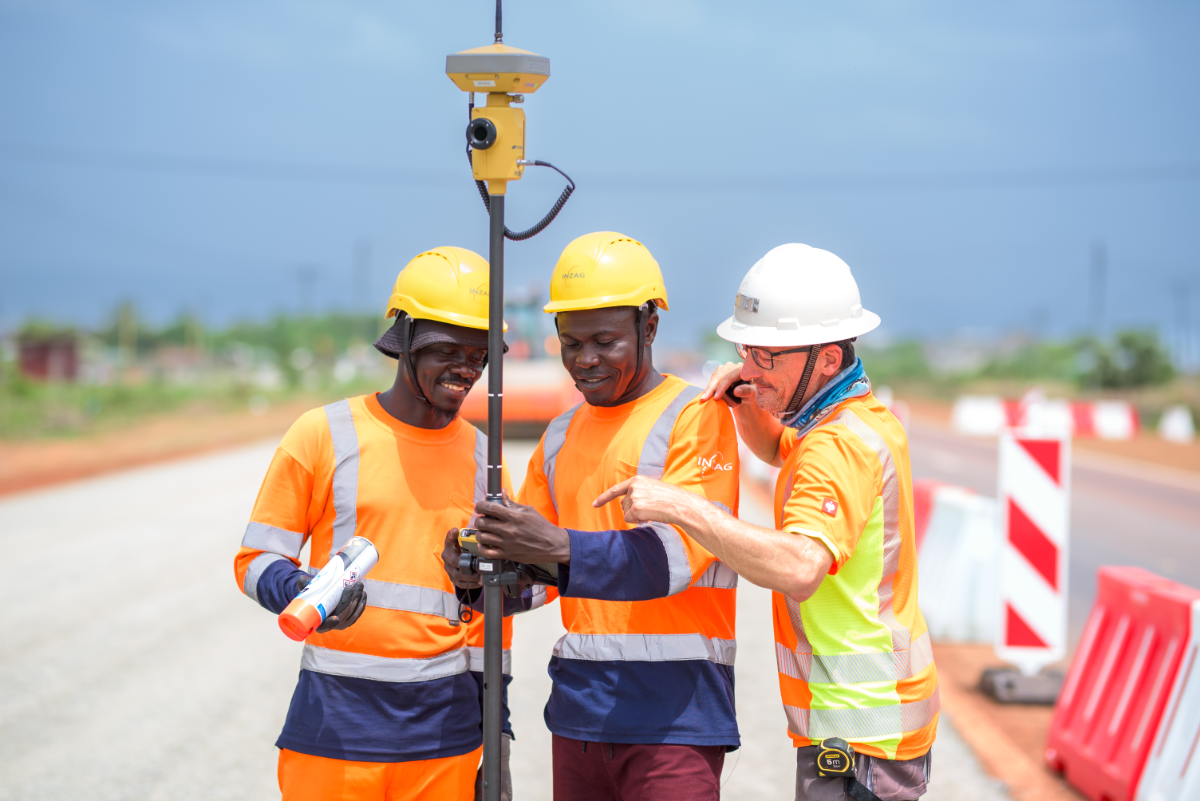
“From the first day on site, we worked side by side with Inzag’s teams to ensure every system was optimized for their workflow. The commitment and professionalism of their operators made it a true partnership.”
“Topcon understands the realities of delivering a project of this scale,” said José Teles, project manager at Inzag.
“Their technology gives us the precision we need, but it’s the consistency of their support that truly makes the difference. They don’t just provide solutions but are also on hand for any additional support and invested in our success.”
Beyond its immediate performance benefits, the introduction of the positioning systems and workflow solutions has also influenced day‑to‑day working practices across the site, with teams embracing the new approach quickly and effectively. Reflecting on the experience so far, José said: “The transition to this new way of working has been smooth, and all the team members involved have adapted well to the change in work processes. The guidance and control provided by the system increases confidence in achieving the correct levels and contributes to a more controlled and efficient workflow.”
A long‑term investment in national mobility
When completed in late 2029, the upgraded corridor will ease congestion around Ashaiman, reduce travel times between Tema and the northern regions, and improve the reliability of freight movement into Burkina Faso, supporting local communities, enhancing road safety, and reinforcing Ghana’s position as a regional trade hub.
For Inzag, the combination of advanced construction technology and a trusted partnership is enabling them to deliver a project of national significance with precision, efficiency, and resilience. For Ghana, it marks a major step forward in building the infrastructure needed to support a growing economy and a more connected future.


