
For decades, capturing the physical world in precise digital detail was the domain of specialized surveyors with expensive equipment and days to spare. Trimble is trying to change that equation, and the results are showing up everywhere from highway maintenance crews to deep-pit mining operations.
Democratized Reality Capture
Trimble’s reality capture portfolio spans mobile mapping systems, tripod scanners, and drone-based lidar tools, all feeding into its software ecosystem, including Trimble Business Center and its cloud platform, Trimble Connect. Together, these tools let users collect, process, and share hyper-accurate 3D models of the real world, from road networks to construction sites to underground tunnels.
From Trimble’s perspective, it’s about more than just building mapping hardware, it’s thinking through the actual deliverables their clients need.
“We can all drive down the same road,” Karl Bradshaw, Director of Product Management explains. “But what does the customer want out of the data?”
Trimble’s answer is software that automates the extraction of actionable insights – looking for cracked pavement, worn lane markings, obstructed signs – and delivers them to the people who need to act on them.
Critically, Trimble is moving that important data to the cloud, breaking it out of the hard drives and siloed workflows that have historically kept it locked away. The goal is to make actionable data accessible to everyone in an organization, not just the surveyors who collected it or the experts in the field.
AI at the Mine
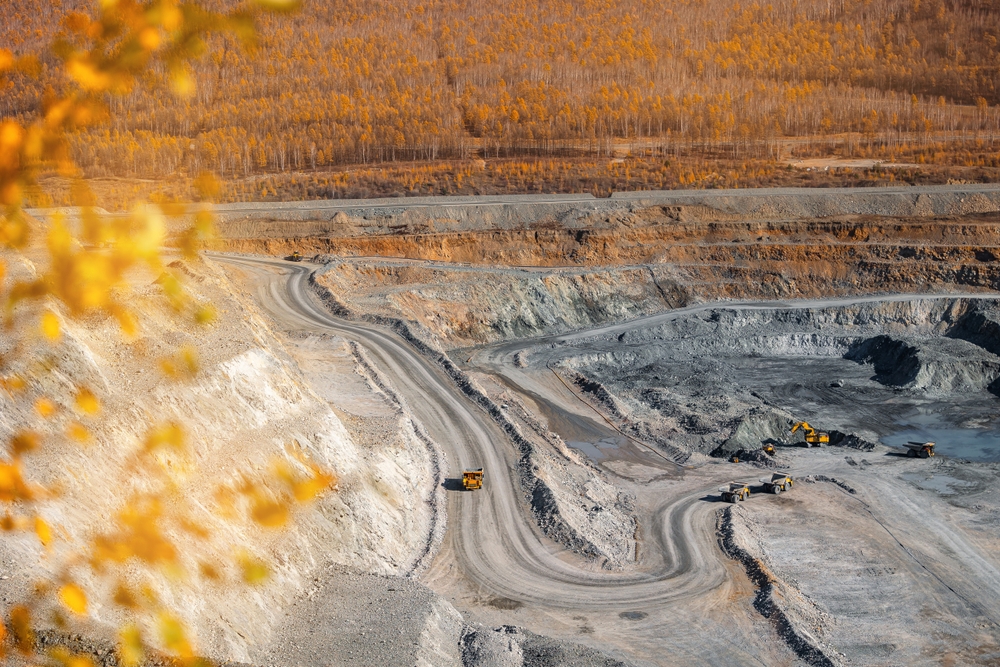
Trimble’s newest frontier is mining. Its Mining Insights platform applies trained AI models to drone and lidar data to automate three high-value workflows: safety compliance, engineering analysis, and production optimization.
In blasting operations, one of the most expensive and data-poor steps in mining, Trimble’s tools now close the loop from drill design to post-blast analysis. Teams can simulate blast outcomes, guide drill machines with centimeter precision, and use AI to automatically measure rock fragmentation after detonation. The result is a feedback loop that helps mines blast smarter, reduce waste, and protect downstream processing equipment.
On the infrastructure side, Trimble’s AI automatically audits haul road berms and pit slope conditions against regulatory standards, replacing the tape-measure-and-clipboard approach with automated drone surveys and color-coded compliance dashboards.
The Bottom Line
Trimble’s pitch is simple: the data exists. The drones are flying, the scanners are spinning, the sensors are logging. What’s been missing is the ability to turn all of that into something useful – quickly, automatically, and for the people who actually need it. That’s the vision of the future that Trimble is building.