

University students from around the world are showing how digital twin technology can be more than just a tool for infrastructure—it can also be a driver of sustainability and social impact. That was the spirit behind the 2025 iTwin4Good Challenge, hosted by Bentley Systems and the nonprofit Enactus, where teams competed to apply digital innovation to pressing environmental problems.
The challenge brought together students from the U.S., Germany, Canada, the UK and Ireland (competing jointly), and Brazil. Their task: use Bentley’s iTwin platform to design practical solutions that reduce waste, accelerate renewable energy, and make better use of resources.
What emerged were projects that didn’t just stay on the drawing board—they proposed real-world applications with potential for global scale.
Building a Marketplace for Reuse
The top prize went to SiTESalvage, a team representing the UK and Ireland, who set their sights on one of the construction industry’s biggest challenges: waste. The World Bank estimates that more than 2.24 billion tons of solid waste are generated globally each year, and up to 40% of that comes from building projects. SiTESalvage responded with a digital twin-powered marketplace designed to divert demolition materials away from landfills.
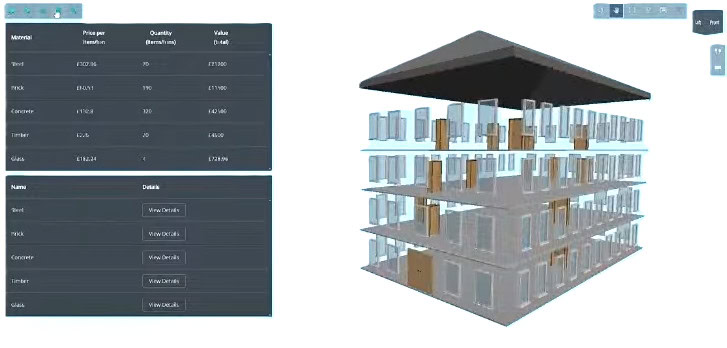
Their platform uses iModels to give stakeholders visibility into upcoming demolition projects, enabling planners, contractors, and communities to identify and repurpose available materials. By using iModels to provide visibility into upcoming demolition projects, the platform showed how stakeholders could identify, plan for, and repurpose available materials, ultimately driving more effective reuse and reducing the industry’s environmental footprint.
From Plastic Waste to Clean Fuel
The runner-up, Basola from Germany, looked at another global problem—plastic pollution. Their solution centered on a solar-powered pyrolysis reactor capable of turning discarded plastics into usable fuel. By integrating iTwin technology and IoT sensors, they created a system that doesn’t just recycle waste but also monitors performance, improving safety and simplifying maintenance.
This fusion of clean energy processes with digital monitoring illustrated how innovation can turn a liability into a renewable resource.
Repurposing Abandoned Land for Renewable Energy
Second runner-up, EcoTwins from Canada focused on land use. Expanding renewable energy infrastructure often runs into conflicts with communities and environmental concerns. EcoTwins proposed turning abandoned gold mine sites—locations often neglected or left idle—into hubs for solar and wind projects.
Their framework combined technical, social, and environmental data to evaluate each site’s potential, showing how digital insights can align clean energy growth with local needs and environmental stewardship.
A Generation Leading with Innovation
For Bentley Systems, the projects underscored how digital twins can drive impact well beyond traditional engineering.
“We are inspired by how this year’s student teams applied digital twin technology and innovative thinking to real-world challenges,” said Chris Bradshaw, Bentley’s chief sustainability and education officer.
“SiTESalvage, Basola, EcoTwins, and the other global student competitors demonstrated the transformative potential of combining creativity with digital solutions to drive more sustainable infrastructure outcomes for communities and the planet.”
Enactus president and CEO George Tsiatis echoed that sentiment.
“These students are showing that business innovation can be a force for good. By tackling pressing issues like waste, energy, and sustainability, they are proving how technology and entrepreneurship can drive lasting impact.”
As part of their prize, SiTESalvage will present their project at the Enactus World Cup 2025 in Bangkok, showcasing their solution on a global stage. A recording of the full iTwin4Good finals is now available online.


