Every week here at Geo Week News, we have been highlighting some of our favorite stories from around the internet that cover the geospatial, 3D, and AEC industries. Whether it’s a fascinating case study, insights from an industry thought leader, or deep dives into new tools, there is never any shortage of great writing and storytelling in this industry. So, below you can find links to three stories that we loved this week.
Mapping milestone in New Zealand: release of high-resolution coastal Lidar data
Staff Writer | GIM International
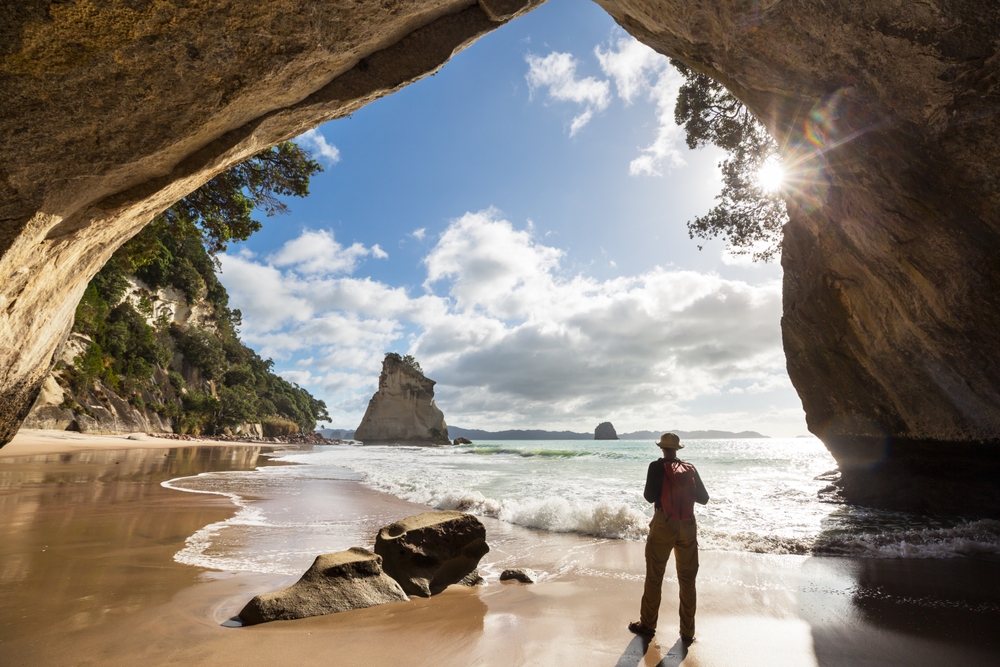
New Zealand's land information agency has released a new batch of high-resolution coastal lidar point cloud data as part of its 3D Coastal Mapping Programme, which aims to cover up to 40% of the country's coastline with seamless topographic and bathymetric data stretching from 200 metres inland to 25 metres below the waterline. The freely available dataset captures millimetre-scale ground features across some of the country's most climate-exposed stretches of coast, giving planners, researchers, and risk modelers a baseline to track sea-level rise, storm surge, and tsunami impacts for years to come.
Cambridge AI tool promises new era of Earth Intelligence from space
Eric Van Rees | Geo:
Researchers at the University of Cambridge have developed Tessera, an AI foundation model that processes petabytes of ESA satellite imagery to generate on-demand Earth intelligence — covering everything from crop patterns and habitat loss to the environmental footprint of conflict. The model's outputs are stored in a freely accessible database called GeoTessera, enabling ecologists, agricultural scientists, and policymakers to run global-scale analyses from a standard laptop with no paywalls in the way.
Tracking urban expansion across the globe
Jnalley | Spatial Source
The World Settlement Footprint (WSF) Tracker, developed jointly by the German Aerospace Center and MindEarth with ESA and the World Bank, is now live, offering 10-metre resolution mapping of global urban growth updated every six months. Beyond tracking where cities are expanding, the platform overlays settlement data with flood, subsidence, seismic, extreme heat, and cyclone hazard layers, a critical capability given that much of today's new development is landing squarely in harm's way.